Hot dip galvanized street Lamp Poles are currently the most mainstream and widely used anti-corrosion treatment method for street lamp posts in the market, known for their excellent anti-corrosion performance, long service life, and good economic benefits. The following is a detailed introduction about hot-dip galvanized street lamp posts:
F、 Introduction to hot-dip galvanizing process
1. Basic principle: The steel
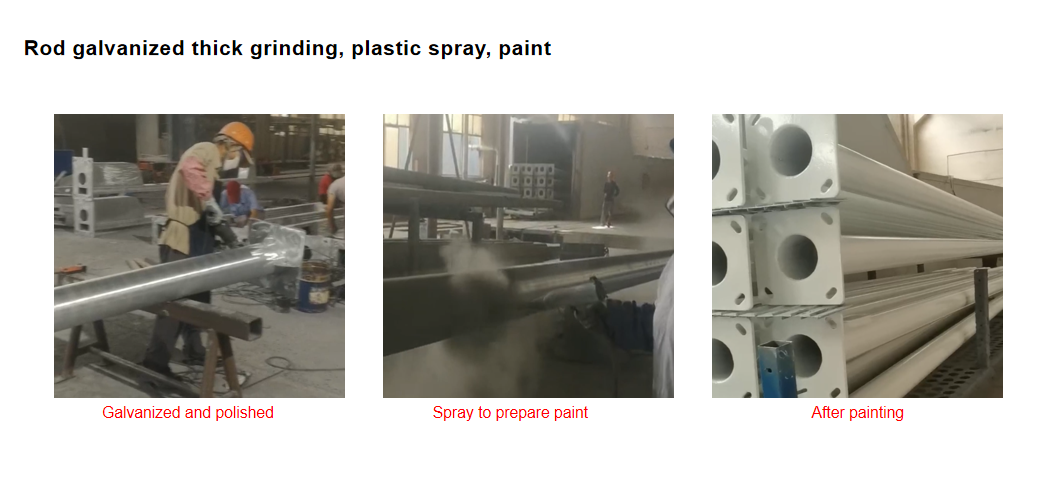
Lamp Post that has undergone strict pre-treatment (degreasing, acid washing, and plating assistance) is immersed in molten zinc solution (usually around 450 ° C) to undergo metallurgical reactions on its surface, forming a layer of iron zinc alloy and pure zinc layer.
2. Difference from cold galvanizing (electroplating):
Different processes: Hot dip galvanizing involves a physical and chemical reaction (immersion in molten zinc), while cold dip galvanizing involves an electrochemical reaction (electrolytic deposition).
Zinc layer thickness: Hot dip galvanized zinc layer is much thicker (usually above 65-85 microns, or even thicker), while cold dip galvanized zinc layer is thinner (usually 5-25 microns).
Adhesion: The alloy layer formed by hot-dip galvanizing has a strong bonding force with the base metal and is not easily peeled off; Cold galvanizing has relatively weak adhesion.
Corrosion resistance life: The corrosion resistance life of hot-dip galvanizing is much longer than that of cold galvanizing, usually up to 20 years or more (under standard atmospheric conditions).
Appearance: The hot-dip galvanized surface has zinc flowers (which can be treated as zinc free), slightly rough; Cold galvanized surface is smoother and more uniform.
Cost: The initial cost of hot-dip galvanizing is usually higher than that of cold galvanizing, but the long-term maintenance cost is much lower than that of cold galvanizing and painting.
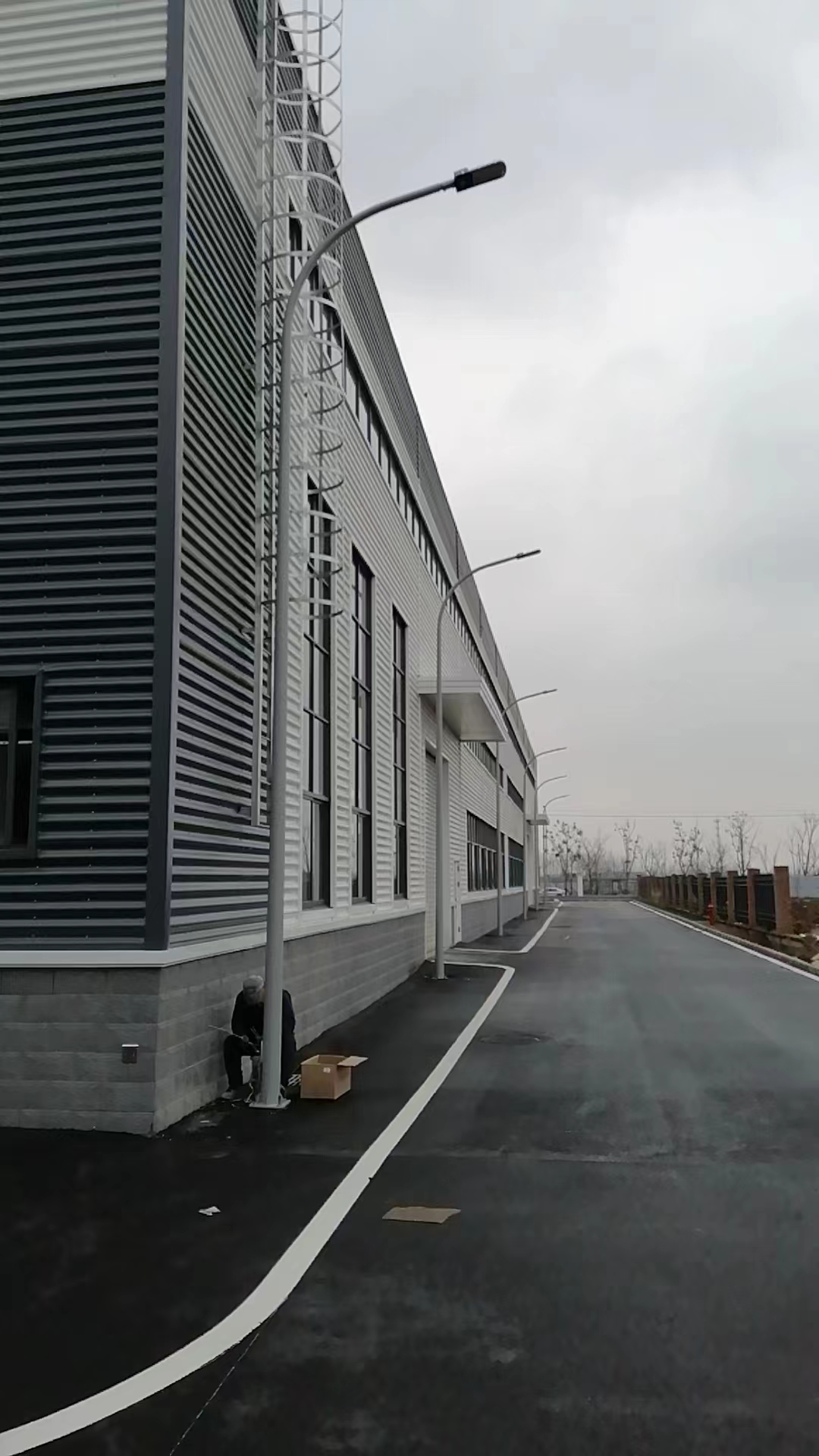
Urban road lighting: main roads, secondary roads, branch roads, block roads, etc.
Highway lighting: entrances and exits, service areas, tunnel approaches, special road sections.
Lighting in squares, parks, and scenic areas.
Lighting in airport, port, and dock areas.
Lighting for large factories, campuses, and sports venues.
It is also widely used in outdoor steel structure facilities such as traffic signal poles, monitoring poles, sign poles, and power poles.