




Send Message
Privacy statement: Your privacy is very important to Us. Our company promises not to disclose your personal information to any external company with out your explicit permission.
Select Language

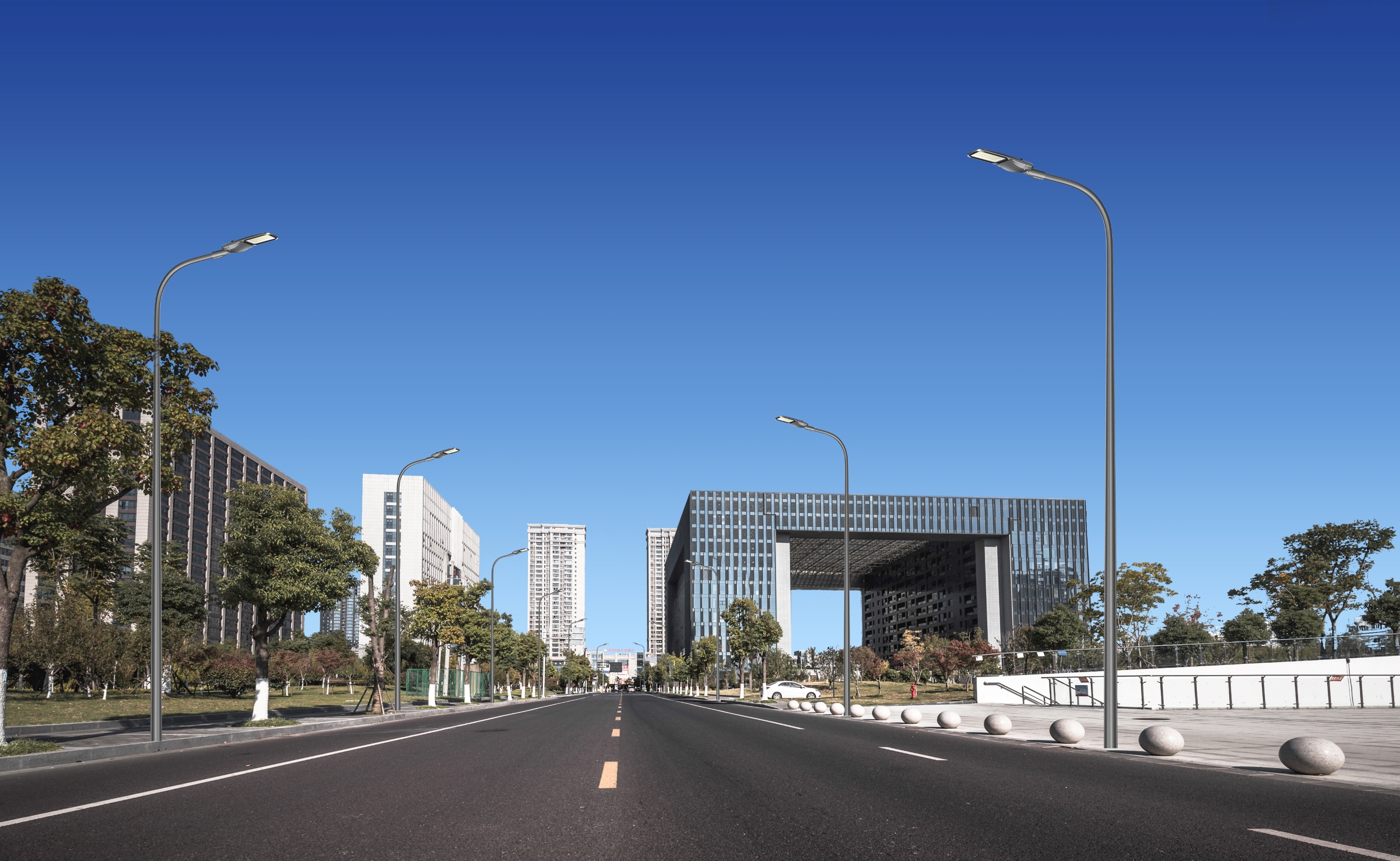
A modern Led Street Light with a rated lifespan of 100,000 hours translates to over 11 years of continuous operation, or roughly 22 years of nightly use (12 hours per night). Compared to the 24,000‑hour life of a standard induction lamp or the 18,000‑hour life of a metal halide, the LED lasts five to six times longer. For a city that currently relamps each fixture every two years, the new interval stretches to a decade or more. In practice, one California municipality that retrofitted 3,200 cobra‑head fixtures with 100,000‑hour LED modules reported that their replacement rate dropped from 180 units per month to just 14—an 82 % reduction. Their maintenance fleet, once stretched thin, now has enough spare time to conduct proactive inspections and clean Solar Panels on adjacent traffic signals.
The benefit scales upward for taller infrastructure. High Mast Light systems, common in ports, stadiums, and highway interchanges, present an even more compelling case. A single high‑mast tower can hold 6 to 12 fixtures, each requiring a lowering mechanism and a two‑person crew to service. Changing a 1,000‑watt metal halide lamp on a 40‑metre mast every 18 months is not just costly—it is hazardous. By replacing those heads with 100,000‑hour LED equivalents, facility operators can schedule maintenance once every eight to ten years, dramatically reducing worker exposure to heights and eliminating the crane rental costs that often exceed the lamp price. A European airport authority reported that after upgrading their apron high‑mast lighting, they went from 22 maintenance calls per year to just two, saving over €120,000 annually in access equipment and labour.
Of course, not every pole can accept a standard LED head. Older poles may have non‑standard bolt patterns, insufficient cooling clearance, or brackets that cannot support the weight of a modern driver. That is when a Customized Pole Solution becomes essential—but it is a targeted fix, not a wholesale replacement. Manufacturers now offer adapter rings, offset brackets, and even complete pole‑top assemblies that bolt onto existing foundations while preserving the original anchor bolts. These custom solutions add about 15–20 % to the fixture cost but still come in far cheaper than a new pole with a new foundation. One Texas highway contractor used customized pole adapters to retrofit 450 legacy high‑mast poles with LED ring‑arrays, completing the project in three weeks without any concrete work or lane closures.
The bottom line is not just about longer bulb life; it is about transforming street lighting from a reactive, labour‑intensive chore into a set‑it‑and‑forget-it asset. With 100,000‑hour LEDs, cities can budget for a single large‑scale replacement campaign every decade rather than constant spot repairs. Crews become more productive, traffic disruptions decline, and public satisfaction rises as streets stay consistently bright. As one Midwest public works superintendent put it, “We used to have a three‑week backlog of burned‑out lights. Now we have a list of three—and those are usually damaged by accidents, not failure.” That is the promise of longevity: not just lower bills, but a maintenance calendar that finally gives public works teams room to breathe.
Author:
Ms. Emma
Phone/WhatsApp:
Email to this supplier
Author:
Ms. Emma
Phone/WhatsApp:
About Us
Related Products List
Contact Us

Privacy statement: Your privacy is very important to Us. Our company promises not to disclose your personal information to any external company with out your explicit permission.
Fill in more information so that we can get in touch with you faster
Privacy statement: Your privacy is very important to Us. Our company promises not to disclose your personal information to any external company with out your explicit permission.